

How many times have you seen this headline in the news? Not only are lives lost but the event organisers end up forking out millions of dollars in settlements.
This is all preventable with proper planning and when a disaster strikes, you are sure to be protected from potential liability. Saving you millions of dollars.
Section 17 (3) (b) of the SASREA Act dictates that the authorised member must act as the VOC Commander or appoint a suitably qualified and experienced member of the SAPS holding at least the rank of Captain.
Let’s continue our journey of exploring the SASREA act.
RECAP
From part 4, it should be evident that the SAPS places a crucial role in coordinating safety and security at an event.
We now know the role of the National Commissioner of the SAPS, Authorised member, the event organiser and the ESSPC.
Another term we heard was “VOC Commander”.
So let us explore what a “VOC” is and the duties of the VOC Commander.
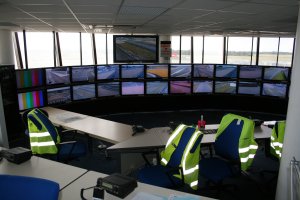
Section 17 (1) defines the VOC as the place from where all the safety and security operations for event is done at a stadium, venue or route.
An event may require additional coordinating points to oversee a particular part of that event but report to a centralised VOC, which will now become the Joint Operations Centre.
Let us take a cycling tour. Often it has a starting point in one place and an end point at another place. Therefore, there may be a VOC at the starting point and one at the end. Also, refer to these VOC’s are as Forward Command Points.
Then a centralised VOC maybe set up to coordinate the activities at both points and along the route.
Section 17 (2) determines that a VOC must be in place for all medium and high-risk events but gives the discretion to the ESSPC to determine where the VOC will be and also to decide whether or not to a VOC is actually required.
Section 17 (3) gives the power to the Authorised Member to determine who must be in the VOC but also provides a list of the relevant role players who should be in the VOC.
These role players include:
- Police Officials
- Disaster Risk Management
- Private Emergency Medical Services
- Fire and Rescue Services
- National, Provincial or local health departments
- Event Permit Office
- Metro Police
- Law Enforcement Officers
- Traffic Services
- Event Organisers
- Safety Officers
- Private Security Service Providers
- Or any other person the ESSPC may designate or the VOC commander may authorise in writing
VOC COMMANDER
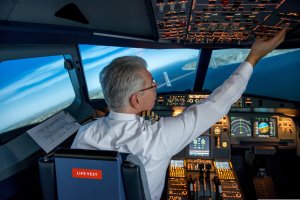
Section 17 (3) (b) dictates that the authorised member must act as the VOC Commander or appoint a suitably qualified and experienced member of the SAPS holding at least the rank of Captain.
Section 17 (4) stipulates that a VOC Commander must:
- Ensure that the ESSPC has prepared a written Contingency and Operational Plan
- Ensure the National Commissioner of SAPS approves plans for high-risk events
- Ensure all role players in the VOC received a copy of these plans at least 30 days before the event
- The VOC Commander must also ensure all relevant role players are fulfil their duties

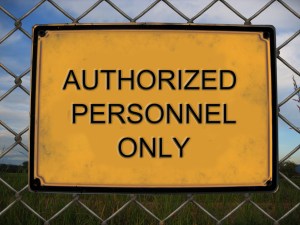
As an event organiser I may determine who may enter an area and for what purposes. I may seek guidance from the ESSPC about accreditation.
In order to facilitate access control, I may have some forms of accreditation.
This could be a simple coloured armband or a more elaborate photo style accreditation.
These designated areas maybe for artists to get dress, a VIP lounge, the VOC or even production staff only areas. Ideally, you would not want you spectators to be all over the venue, disrupting operations and for their own safety.
The designated area must be clearly marked and the type of accreditation required to be clearly displayed at these entry points.
An access control officer should control each entry point to a specifically designated area.
Section 18 (3) stipulates that all persons entering a designated area must produce the appropriate accreditation for entry to such an area, upon request of an access control office. Without accreditation, the access control officer may refuse you entry to the designated area.
Any person found in a designated area, without proper accreditation may be ejected from that area.
In South Africa, Section 18 (4) makes it a criminal offence to enter a designated area without accreditation, that upon conviction, such a person may receive a fine, face imprisonment or both.
The Minister of Police may also prescribe the process to follow in order to obtain accreditation. The Minister of Police may require specific information to be displayed on the accreditation card.

TICKETING
Ticketing is another form of accreditation. Spectators have to buy a ticket in order to attend my concert.
Section 19 (2) stipulates the without a ticket, where it is required, access to the venue may be refused. A person may gain access by producing written permission from the event organiser to enter the venue in lieu of a ticket.
Section 19 (3) stipulates number of tickets sold may not exceed the safe capacity of the venue. When determining the number of tickets that is available for sale, it is also important to calculate how much staff, performers, VIP guests, emergency services and any other persons performing duties at the venue and to deduct that from the safe capacity of the venue.
Let us do quick maths. The stadium can comfortably accommodate 56 000 people including staff. My staff on the day, including all other persons performing duties there, will be 4500.
So theoretically, 56 000 – 4 500 would allow me to sell 51 500 tickets. The floor space taken up by the stage, VIP areas and storage that may limit the amount even more
A room is 20m² (65.62 feet²). An allowance of 1m² (3.28 feet²) is made for a person. Therefore unfurnished the room could accommodate 20 people. 20m² ÷ 1m² = 20 people. If the room is furnished, the capacity of the room changes. Let us say, the furniture occupies 5m²
20m² -5m²(16.4042 feet²) leaves us with 15m² (49.2126 feet²) of open space and therefore the capacity of the room is now 15 people standing.
And we can go on and on trying to include a whole host of factors but for this exercise, this gives you an idea of calculating the size of a venue you may require based on the amount of persons you wish to have attend your event.
After all is said and done, I am allowed to sell 48 000 tickets.
Ticket sales may be prohibited on the day, at the venue. Ticket sales at high-risk events must be done at least 1 km away from the venue.
An event ticket should at minimum, contain the following:
- The name of the venue and the area where it is
- The nature of the event
- Day, date and time of the event
- Layout plan of the stadium or venue with block or sector spectator orientation information
- Conditions of entry
The pre-sale of tickets makes more financial sense as the event organiser I can determine if proceeding with the concert will be feasible and may reduce my need to obtain credit to host the concert. No worries for me, Mariah is performing so my pre-sales are through the roof.

SPECTATOR AND VEHICLE ACCESS CONTROL
The event organiser must appoint a security officer, in writing, as an access control officer and peace officers to facilitate search and seizures at access points.
Only a peace officer may search a person or vehicle entering a venue or stadium.
A person entering a venue or stadium, inside the venue or stadium already or along a route may be subject to:
- Submission to a body search (Same gender)
- Have bags or similar items in their possession searched
- Have their motor vehicle search
Searching or screening may be physical or with the aid of an electronic device.
Section 20 (5) stipulates that an access control officer or peace office must display on his or her person an accreditation card issued under section 18 certifying his or her appointment.
Every person has the right to refuse being searched. Therefore, conditions which include the submission to a search must be clearly indicated on the ticket and displayed at the access point.
Section 20 (6) allows an access control officer or peace office to refuse entry to any person wanting to enter the venue or stadium, refusing to submit to a search or who appears to be intoxicated or under the influence of a prohibited substance.
Zones specifically designated for vehicle or pedestrian traffic must be clearly marked.
Vehicles may not enter vehicle-free zones unless accredited. Any vehicle found in a vehicle-free zone may be requested to be removed if the owner or driver of the vehicle is readily available. Should the vehicle be unattended, the access control officer may request a police official or peace office to have the vehicle removed. Any costs incurred, including impound fees, will be payable by the owner / driver of the vehicle.

PROHIBITED ITEMS
As an event organiser, in conjunction with the ESSPC, I may prohibit or restrict certain items or substances, not already prohibited by law, from being brought into the venue or stadium. These items need not be, illegal but may or may not be a threat to the safety of the event. We have sufficient vendors at the stadium for my concert and therefore no food, snacks or beverages may be brought into the stadium.
Whilst these items are not illegal, it could pose a risk to the event. There could be cases of food poisoning breaking out. It would be difficult to trace the source of such an outbreak if people consumed their own and bought food at the vendors.
Secondly, it would limit the sales the vendors could expect if people were to bring their own food. This would cut your revenue stream at future events if vendors were not making money at your event. What if you had your own concessionary stands?
What about the risk of people bringing alcohol in cool drink (soda) bottles at a family friendly event?
Typical illegal items may include drugs, firearms and dangerous weapons.
Items that may carry a political message could be banned from being brought into the venue. This could include an item of clothing. These kind of items may lead to conflict amongst different groups of spectators.
A list of all prohibited items must be displayed at all access points.

PROHIBITED NOTICES
What is the worst venue or stadium that you attended an event at? I will give a minute to think about it.
Have you ever been to a place so unsafe that you thought to yourself, “How on earth could that event have been held there?”
There may be conditions at a venue or stadium or even along a route that makes it dangerous for spectators to attend. The building may be dilapidated or due to crime in that area, it is too dangerous for spectators to stand along the route.
In such a case the National Commissioner of SAPS, ESSPC, Authorised Member or VOC Commander may prohibit or restrict the admission of spectators to the venue, stadium or route.
The relevant prescribed notice will be issued.

SPECTATOR EXCLUSION NOTICES
Heard of the “Barmy Army”? Sports fans can often get very passionate in support of their teams. This passion and rivalry easily ignites bouts of violence, which if occurring in a closed stadium, may result in a disaster.
English football spectators are infamous for their hooliganism. In 2024 just before a Euro 2024 match between England and Serbia in Germany, all hell broke out between the fans of the two teams. Riot police had to be called in to quell the violence.
To be fair, it’s not only English football fans who misbehave.
Should the National Commissioner of SAPS, ESSPC, Authorised Member or VOC Commander have reasonable grounds to believe that the attendance by a person or group of persons is likely to lead to a disruption of the event, lead to the injury of persons and have the potential of property being damaged, a spectator exclusion notice may be issued to such a person or group of persons.
In this case the threat is coming from the person or group of persons attending, not environmental factors.
The person or group of persons are not limited to sports fans but may include political figures, criminal elements or any other persons or group of persons, who are likely to cause problems by attending your event.

STATE SECURITY SERVICES
It’s December and everybody and their cousins are having are hosting events. Just how much events can be fitted around Cape Town Stadium at any given time?
If the authorised member is of the opinion that the local police will not be able to ensure the safety of everybody in a particular area due to the large number of events being held at the same time in the same area, the event organiser must be inform accordingly.
Section 24 (2) (b) empowers the authorised member to take any steps necessary that may be reasonable and appropriate under the circumstances, to protect property and persons at an event.
This may include the deployment of state security services. This could also mean that an event organiser may have to pay for additional security measures.
I am so glad I did thorough research in the early stages to ensure that my concert does not clash with any other events.
Once again proof that research can save you a million dollars.
PUBLIC LIABILITY INSURANCE
To have or not to have is the question. Why do I need public liability insurance?
A stampede claims the life of just one spectator. He is the only breadwinner in the family and has two young children.
The family sues you for damages to the amount of R 20 000 000 rand or $ 1 000 000. This is the amount calculated that it will cost to for future expenses for these children and his wife.
The court agrees that you were negligent and since it doesn’t hurt you financially, you pay. No problem right?
What about if the amount was 10 times more or maybe 100 times more? No problem still?
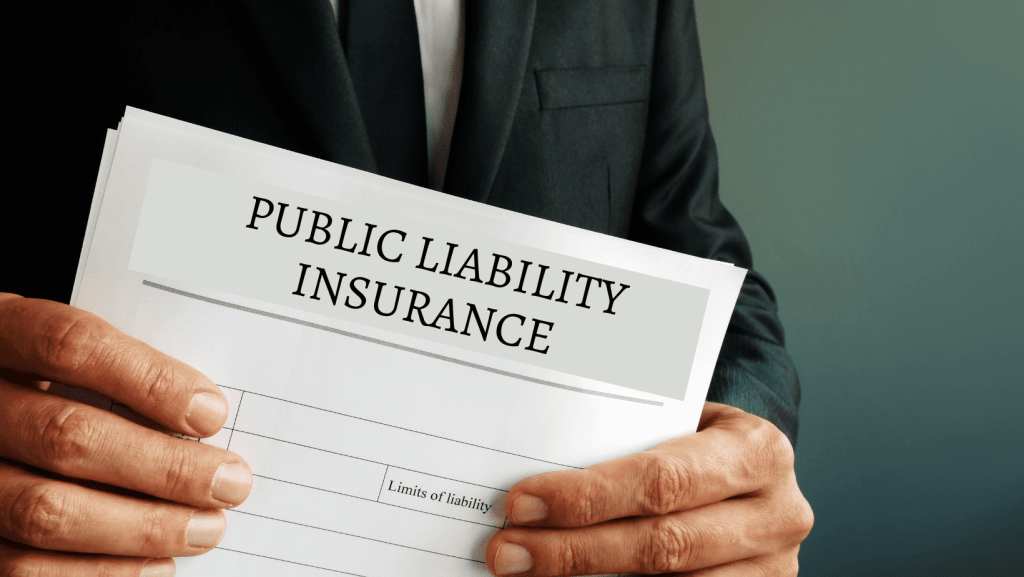
Therefore, it is essential that an event organiser has public liability insurance in place to be able to settle any such claim.
Section 25 (1) prescribes that an event organiser has public liability insurance in place.
The insurance must be obtained from a registered or authorised person under section 7 of the Short-Term (Act 53 of 1998) and Long-Term Insurance Acts (Act 52 of 1998).
Government officials hosting official events on behalf of a government department are excluded from this provision. The government department concerned shall accept liability for any loss or damage that may result from the hosting of such an event.

THE APPEAL BOARD
Section 26 allows for the establishment of an Appeals Board.
Section 42 gives an event organiser the right to appeal any decision made in terms of the provisions of SASREA.
This appeal is lodged with the appeals board. However we not going to dwell deep into this aspect of SASREA.
What is important to know that as an event organiser you can appeal the risk categorisation or a prohibition notice.
A venue or stadium owner may appeal a safety certificate.
Any person or groups of persons excluded by means of a spectator exclusion notice may also appeal such a decision.
WOW! Who knew that hosting an event was more than just décor, the band, flowers and catering?
At the end of the day, whether you hosting a small intimate family gathering or a huge concert, it is good to know what is expected from you as an event organiser.
Now I am prepared and know my one million dollars are secure.
Leave a Reply