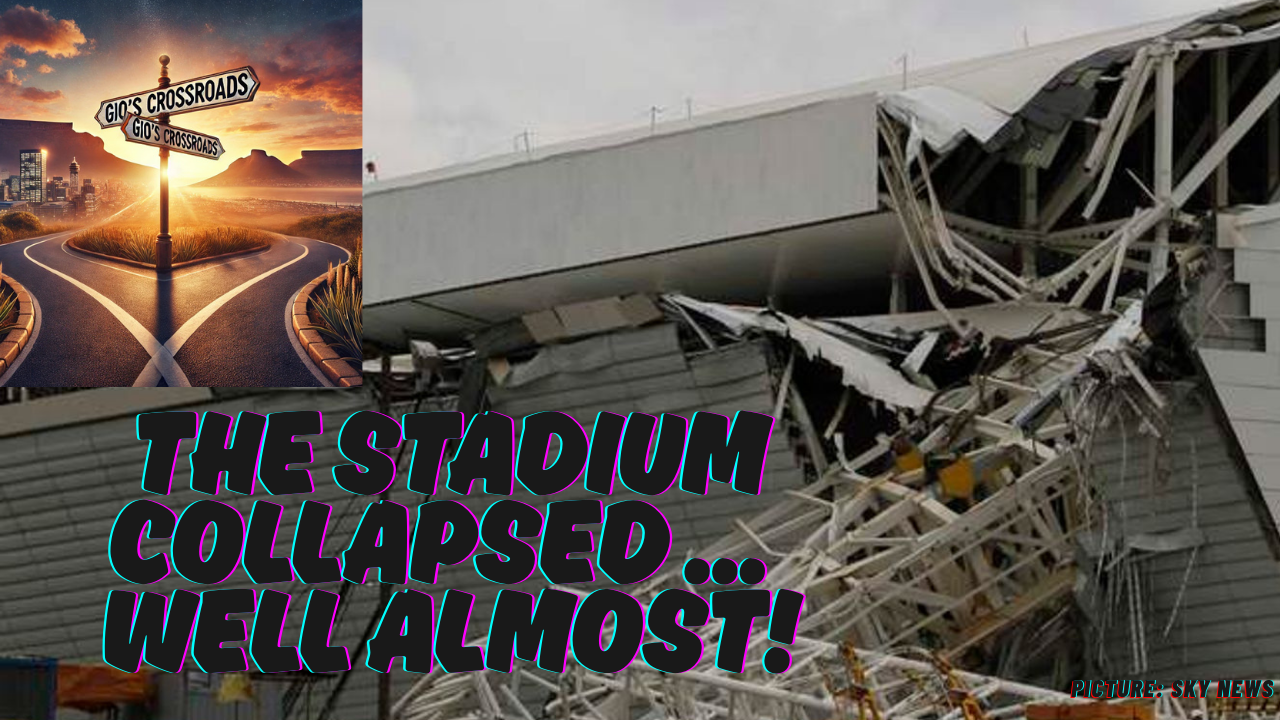

The stadium collapsed and claimed the lives of 43 people.
How do we prevent that?
In this 8-part series we will explore the world of events, specifically from a Cape Town point of view. These will be concepts that could be applied anywhere.
Looking at the various phases of planning, hosting and post event activities which contributes to a successful and safe event.
Whether or not you actually held an event before or you are toying with the idea of hosting one, this series will help you navigate the adventurous, sometimes difficult and yet still rewarding process.
We will also explore the less talked about side of events like safety compliance and other critical issues.
Welcome to my series on event safety and compliance in Cape Town.
Key concepts include, research, planning, execution and the postmortem
In part 1 we will dissect the first concept, namely research. While the common adage maybe be “Failing to plan is planning to fail” research could very well be the single most critical factor to hosting a successful event.

WHY DO I NEED TO DO RESEARCH?
You may be saying to yourself, you know how to organise an event, why do you need to do research? Let me tell why! The first question you need to ask yourself is why do you want to host an event?
WHY DO YOU WANT TO HOST THE EVENT?
Do you want to make a profit, merely market your product or business or spread a message?
Are you holding a competitive sporting competition, sharing your knowledge or encouraging tourism?
Do you want to raise money for charity, celebrate a personal or community achievement?
Will you event be a combination of the above

KNOW THE TYPE OF EVENT YOU WISH TO HOST.
Are you hosting a Social, Business or Professional, Entertainment or Cultural, Political or Education and Knowledge Sharing event?
Social events are generally no brainers. You are hosting an event to celebrate a personal milestone or achievement. Generally speaking, only family and friends are going to attend.
You will be supplying all the snacks and beverages, provide the venue and organise any entertainment which you may deem appropriate.
You are the sole funder of the event and there is no expectation of making a profit. The theme of the event, colour scheme and décor will suit your personal style and taste.
Business or professional events focuses on the promotion of a brand, a particular service or group of services or companies. It also provides a platform for industry players to network and compares notes, so to speak. A chance for wheeling and dealing. This is where big players make big deals. The motivation for the event is generally not to make an immediate profit from hosting the event but the promise of future gains through networking.
Entertainment and cultural events are generally held with the idea of turning a profit. Concerts, festivals and carnivals mix entertainment with a cultural experience where the event organiser may provide additional services like food vendors and merchandise to enrich the experience. The biggest cultural or rather religious event in the world is the annual pilgrimage to the holy city Mecca. Millions of Muslims partake in this annual pilgrimage. These types of events may be family centric or for the more mature crowd.
Political events are held to promote a particular message or a particular political party or class. These events are meant to rial up attendees emotionally. Often anybody attending this kind of an event with a dissenting opinion, may face violent confrontations or actual physical harm. Political rallies or meetings may also be met with protests by opposing parties with opposing views or ideology.
Educational events which could be held as workshops, talks, lectures or expos are organised to educate people of a particular subject matter. Attendees wish to expand their knowledge base or even just to compare notes. These are generally smaller in size and are not aimed at the general public but rather certain segments of the population whether it be industry related such as workshops for paramedics or educational discussions on quantum physics.
Events may also occur spontaneously, but we won’t focus on that as it’s nearly impossible to plan for such an occurrence. It’s important to know that a small house party or funeral can turn into a major event. How would you deal with that?
KNOW YOUR AUDIENCE
Consider the audience you are hoping to attract. Will your audience be family units of different ages? Are you going to cater for teenagers and young adults? Is your audience of a more mature age? Knowing your audience, guides all the rest of your planning for your particular event. Simply casting a net and hoping to catch a large audience will lead to financial disaster or catastrophic failure. This the single most important end point that you plan for from the get-go.
LOCATION
This one of the most important reasons why events fail, Event Organisors often choose the wrong location and venue to host a particular type of event. Just let that sink in for a moment. The actual location must attract the kind of audience you hoping will attend your event.
The socio-economic landscape of a community will determine the kind of events that could be held successfully, especially from a financial perspective, in a particular location.
The infrastructure in place in a location is of paramount importance, the availability of things like public transport, running water, electricity and health facilities.
Public Safety is another consideration when choosing a location. What is crime like in your chosen location? How quickly can the police, the fire department or an ambulance respond to an emergency?
Once you have chosen your location, you need to find a venue that will most likely suit your needs. This maybe a purpose-built venue such as a football stadium or a multipurpose hall.
The venue should also have sufficient infrastructure that will enable you to host a safe event without you having to bring in additional infrastructure such as toilets, seating, electrical points, temporary structures and so on.
The more infrastructure you have supplement at the venue, the bigger the cost to you and the less your profit margin.
THE COMPETITION
By now you know the type of event you want to hold and why. You also know the kind of audience or patrons you wish to attract. Importantly, you found the perfect location and an amazing venue that simply ticks all the boxes. Are you excited yet? it’s time to evaluate your idea. The next step in the research phase is to evaluate the competition. This will provide you with some valuable information.
Was a similar in nature event held in the area? Was it successful? Were there any failures? Check the Facebook page of the event, check the Instagram comments. How about TikTok?
If no similar event has been held in your chosen location, pause! This is a red flag that should not be ignored at all.
Maybe it would be a good idea to do a poll via social media in that area. Speak to the locals. A feasibility study maybe required. Speak to the event specialists in that area.

COMPLIANCE
This is where many of your hidden costs will lie.
In South Africa, events are regulated by the Safety At Sports and Recreation Events Act. This legislation was passed by Parliament and came into effect in 2010 following the Ellis Park disaster in 2001 at the Ellis Park Stadium where stampedes claimed the lives of 43 people and saw 158 spectators injured. We will explore the SASREA act in more detail in a later episode.
In addition to this, municipalities may also have their own by laws that govern how events are held within the municipal area. You may have to apply for a permit to host a public event.
These regulations may add additional obligations on event organisers which must be fulfilled in order for an event to be held.
These regulations not only places obligations on event organisers but on municipalities and the South African Police Service as well.
Tune into future episodes, when together we will breakdown the SASREA act and the by-laws of the City of Cape Town

IT’S ALL ABOUT THE MONEY
Always and I mean always, before you even consider moving into the planning phase, you need to have a budget proposal.
Develop an estimated budget. This is where the costs of hosting the event need to be considered. How much infrastructure do you need to procure, to make the venue suitable? How much does the venue cost to hire? How much are you paying the entertainment? Do you have volunteer staff, or must they be paid? What kind of service providers are you going to need and what is the cost? How much food and beverages must you provide? What about décor? IT requirements? And the list goes on and on.

LET’S RECAP
Know why you want to host an event.
Choose the type of event you want to host.
Decide on the audience you wish to attract.
Location, Location, Location. In real estate, location is said to the be the most important factor when selling property. A proper location and suitable venue are a third of the battle.
Know your obligations.
Money makes the world go round. Draft a preliminary budget.
I hope you learnt a few new things and had some fun. We have many more exciting ideas and concepts to discuss. Knowledge is power.
So, join me in the part 2 when we will discuss the planning phase of hosting events.
These tips and tricks will help you navigate a career in event planning.
Become the next big name in event organizing and get filthy rich.
Leave a Reply