

The arrest of Fadiel Adams has raised many questions with regard to how our justice system functions. What led up to the arrest?

The Allegations
Before we can deal with the arrest, we need to know what led up to this moment.
It’s alleged that Fadiel Adams allegedly and obstructed the ends of justice and fraud. This is just a synopsis of the charges and not a direct quote from the charge sheet presented in court.
The charges are a result of two interviews Fadiel had with inmates at the Westville Prison in Kwa-Zulu Natal. One of the inmates was a suspect in the murder of ANC Youth League Secretary-General, Sindiso Magaqa, who was assassinated in 2017 after he reported corruption with KwaZulu-Natal’s Umzimkhulu Municipality.
These interviews were conducted in November 2024 and January 2025. This fact is not disputed by Mr Adams. Mr Adams obtained affidavits from these inmates. Once again Fadiel does not dispute this fact either.
Both inmates were awaiting trial at the time with the second inmate being an accused in a part-heard matter, meaning the case was before the court and the trial being in process. These interviews were done without the legal representatives of these inmates being presented. This is an important factor to note.
Have the constitutional rights of these two inmates not been infringed upon?
The second charge of fraud, stems from the allegation that he misrepresented himself by using his parliamentary position to gain access to these inmates. Fadiel allegedly told prison officials and SAPS that he was acting in an official capacity.
Prison officials said that no authorisation was given to Mr Adams to visit the inmates at the prison and thus done so unlawfully. That can be disputed as he was given access to the inmates on two occasions, so someone had have given him permission to see the inmates. Be that as it may, it does appear that this permission was obtained fraudulently.
It is also alleged that this same misrepresentation was used to obtain an official escort from the King Shaka Airport to the Westville Prison and back again. Who done the escort and whether blue lights and sirens were used is semantics.
Ian Cameron, chairperson of the parliamentary committee on policing, has denied that Fadiel Adams had a mandate from or acted on behalf of the said committee. Fadiel is a member of this committee. Mr Adams is therefore alleged to have acted outside his scope as a member of parliament.
Fadiel Adams have defended his actions in the media time and time again and maintains that this is an attack on him for being a whistleblower on corruption.
As an activist against corruption, his actions may have led to the arrest of many top police officials for corruption and tender fraud amongst other things.

The Prima Facie Question
The case started as an inquiry which then in turn has led to formal charges against Fadiel Adams. An inquiry is an investigation that may later be changed to a criminal investigation.
From what is available in the public space, it appears that there is a prima facie case for Fadiel to answer. What this means is that, at least on face value, there is sufficient evidence for him to appear before court to answer to these charges.
After concluding the investigation, SAPS felt that they had a strong case and it was sent to the Director of Public Prosecutions in Kwa-Zulu Natal for a decision on whether to proceed with the prosecution of this case or not.
The DPP then proceeded to obtain a J50 warrant for the arrest of Fadiel Adams. To obtain a J50 warrant, the DPP would have to apply to a magistrate’s court in terms of section 43 of the Criminal Procedure Act.
In this application, the crime that was allegedly must be identified, clear state the matter falls within the area of jurisdiction of the relevant court and provide a basis for the reasonable suspicion that the person has committed a crime.
The magistrate will evaluate the application and if satisfied that a prima facie case exists, to believe that the accused person indeed has a case to answer in court.
The issuance of the J50 warrant is in no means indicative of the guilt or innocence of Mr Adams. He remains innocent until proven guilty.

The Legal Game
Our legal system is based on a system of adversary. Two parties battle it out on court, presenting opposing arguments to the same set of facts. But our justice system relies on the rule of law.
A person may be brought before a court by means of an arrest, a summons, written notice or indictment in terms of section 38 of the Criminal Procedures Act. An arrest is the most severe of the four methods as this is an infringement of one’s constitutional rights to freedom of movement, which is allowable in terms of section 36 of our Constitution.
Section 36 of the Constitution, however, requires that these limitations be reasonable and justifiable, for a legitimate purpose and proportionate. This is where the moral and ethical debate begins. Whilst the law allows for a person to be arrested with or without a warrant, was it necessary or the best method to get Fadiel to court?
A warrant of arrest that is granted by a competent court, is an order of that court for the police to arrest the person mentioned in the warrant and bring that person before that court.
The legal team for Mr Adams has approached to the Western Cape High Court for an order compelling the police to hand over a copy of the warrant to Mr Adams. This was an unnecessary action as the police is compelled by Section 39 (2) of the Criminal Procedure Act to do so. The more telling objective was obtaining the supporting documents that led to the issuance of the J50 warrant.
This is very important for his defence. This allows the basis for issuance of the J50 warrant to be challenged. This however only invalidates the J50 warrant and subsequent arrest. This may mean a big pay day for Fadiel but may not be enough to squash the actual case which he still will have to answer for.
Armed with the warrant of arrest, the Political Killings Task Team came to Cape Town to arrest Fadiel. Many questions have been asked as to why Mr Adams couldn’t just hand himself over, why didn’t Cape Town police arrest him, why was he transported at the back of a police van and so on.
First and foremost, the PKTT are the investigating officers in the case and therefore responsible to get Fadiel in front of the court. Even if he was arrested by local police, the PKTT would have had to come fetch him and transport him to KZN.
That is how the internal policies of the SAPS works and these protocols were followed. Therefore, the way the arrest was executed is lawful.
As for the way he was transported to KZN is once again within the prescripts of the SAPS. Arrested persons must be transported in a manner that is safe for both the police and the suspect. However, where was the humanity in this method of transporting arrested persons across the length and breadth of South Africa.
The key observation here is that many other arrested persons get transported like this every day without anybody raising their voices to call it out. Since everybody is equal in the eyes of the law, surely, we can’t be arguing that Fadiel deserves special treatment?
However, other people of similar status as Mr Adams, have been given better courtesies.
According to the police, stops were made along the way to afford Mr Adams time to rest and be provided with meals as is his constitutional rights. Nothing indicates he was treated in a manner that was unconstitutional during his transportation to KZN.
The police throw around terms like cost containment as a reason for transportation by road of Mr Adams to KZN. In this case one plus one does not always equal to two. Given the profile of Mr Adams and the threat he could likely pose to the members transporting him, maybe a two police officers on a flight with Mr Adams could have been feasible, without there being a security threat. That’s up for debate.
Police should consider retro fitting minibuses or sedans for the transport of arrested persons over long distances rather than utilising bakkies with steel canopies.
Once again there is a game of ping pong when it comes to the question of why Fadiel Adams wasn’t given an opportunity to hand himself over rather than being humiliated with being arrested in the public eye.
This has turned into a “He said, she said” moment. The police said he was informed to hand himself over, but the defence says he didn’t receive the warrant. All semantics once again. Hindsight is 20/20.
Fadiel should have flown to KZN with his legal team and handed himself over to the PKTT. Instead, he took to the media and continued with his rhetoric and public spat with SAPS. He should take some responsibility for landing up in this situation.
This leads us to the current situation of Fadiel being in custody awaiting a formal bail hearing.
In terms of section 35 of the Constitution and section 50 of the Criminal Procedure Act, an arrested person must be brought before a court of competent jurisdiction within 48 hours of being arrested.
Furthermore, at the first court appearance, the accused must be informed of the reasonable reason for continued detention or be released from detention if it is reasonable and in the interest of justice for such a release.
At Fadiel’s first court appearance, the prosecution indicated that their initial position was not to oppose bail but have sited his behaviour as a key factor in coming to this decision. The prosecution emphasised his “Catch me if you can” attitude. Fadiel called himself a fugitive on national television. Even his attitude towards the courts itself came into focus. Are these reasons based in law and in line with section 60 of the Criminal Procedure Act or is the state grasping at straws?
Bruce Hendricks, acting for Mr Adams, countered that the state had enough time to prepare for any bail applications which Mr Adams would bring.
The state is relying on section 60 (4) (a) to (e) in opposing his bail and asked the court to postpone the case for a formal bail hearing.
Hendricks placed on record that any postponed granted would not be in line with section 168 of the Criminal Procedure Act.
Nonetheless, the court has granted a postponement and now both parties will have time to prepare their respective arguments.
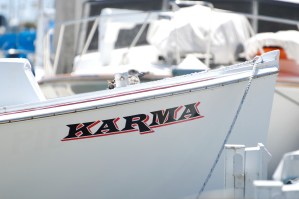
Karma
Whether you like Fadiel or not, objectively, the letter of the law has been followed in this case, on face value. This will be argued and fought in court. This will make for entertaining viewing.
Just because an action is legal, doesn’t make it moral or ethical. The transverse is also true. Actions but the Apartheid state was legal but unmoral and unethical. Today overreach by the state will lead to accountability. South Africans will not be oppressed by the law.
For those haters of Fadiel, celebrations are the order of the day. Calling is arrest and subsequent processes as karma.
Fadiel frequently took to social media celebrating the arrest of other people and calling anyone he opposed derogative terms. Actions many feel, are unbecoming of a parliamentarian.
In the court of public opinion, Fadiel has been convicted already but just as many are in support of him. This case has even taken on racial connotations and is seen as the oppression of the coloured race.

Honesty
Calm must prevail and we must allow justice to take its course. We must also be honest with our outrage.
We must demand social justice for all. Every accused must be treated the same by our justice system. Innocent until proven guilty.
The average man on the street must be given the same courtesies as Juluis Malema, Cyril Ramaphosa, Jacob Zuma, Shabier Shaik and of course Fadiel Adams.
Fadiel can use the law to challenge and fight his case.
Any travesty of justice, regarding Fadiel Adams, will turn him into a folk hero and a martyr.
Leave a Reply